
A California Stewardship Alliance Open Framework
Workforce homeownership, built right.
An open framework for California cities, counties, and the state.
The Problem Nobody Is Solving
The workforce that keeps California running can’t afford to live there.
Teachers, nurses, firefighters, childcare workers, transit operators, and municipal employees earn 80–100% of Area Median Income. Federal affordable housing programs target households at 30–60% AMI. Market-rate housing in most California cities requires income two to three times what that workforce earns.
The gap is real, documented, and growing — and no existing program fills it.
Traditional affordable housing development carries a multi-million-dollar subsidy gap per project. LIHTC deals take three to five years to close. Jurisdictions that want to do right by their workforce are stuck between programs that don’t reach them and development timelines that outlast governing terms.
Built Right was designed to close that gap.
$1.2M+
Median home price
in California coastal cities
80–100%
AMI: the workforce gap
no existing program reaches
18–24
Months to Phase 1
occupied homes
The Model
What Built Right Is
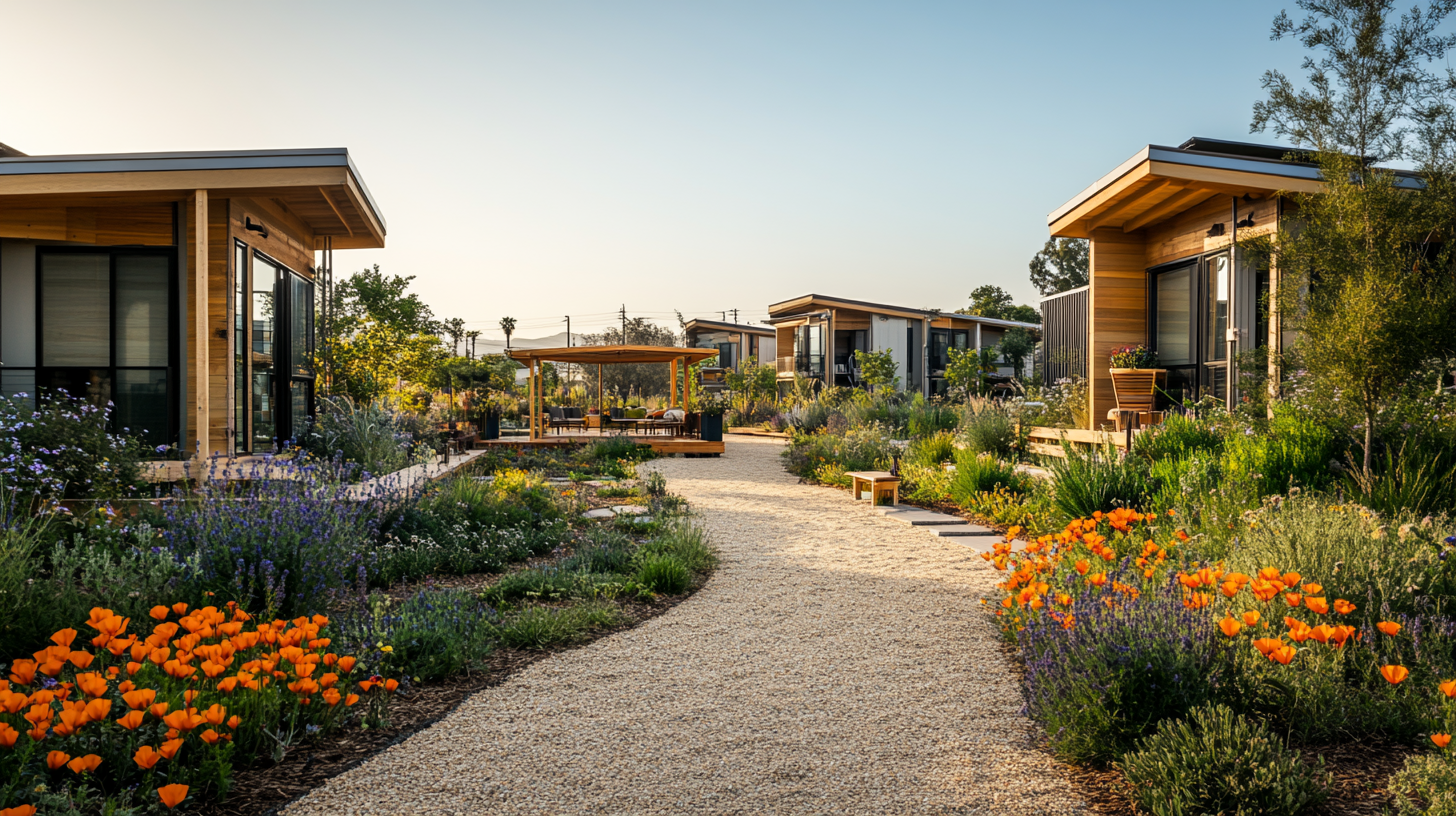
Built Right is a publicly-initiated, phased, precision-built workforce homeownership framework on publicly-owned land. The host jurisdiction identifies an appropriate parcel, rezones as needed, runs a public design competition with precision-built housing manufacturers, and sells the resulting homes at cost — under a structured ownership architecture — to households earning 80–100% AMI.
No ongoing subsidy. No developer profit. The host jurisdiction recoups its full investment through the sale of the homes. What remains is permanent: beautifully designed, owner-occupied homes on publicly-held land — and a replicable model the jurisdiction can expand to additional parcels.
Built Right is published as an open framework. Any California city, county, or state agency may adopt it. The California Stewardship Alliance maintains the reference documents and model legal instruments, but does not gate adoption.
Four Design Principles
What makes this model different.
01
Publicly-Owned Land
Most California jurisdictions hold underutilized parcels their own task forces have already identified. Starting on publicly-owned land eliminates the single largest cost in any housing project — and is the structural choice that makes the at-cost economics work. The jurisdiction never sells the land; it holds it in permanent public stewardship on a 99-year ground lease.
02
Precision-Built Construction
Factory-fabricated homes built to exacting tolerances, delivered to the site, and installed in days rather than months. Architecturally distinctive, seismically resilient, fire-resistant, solar-ready. This is not the prefab stigma — it is the opposite of it. It is what forward-looking jurisdictions build when they want to get housing right.
03
Sold at Cost, Self-Funding
The host jurisdiction makes a capital investment, not a grant. Households at 80–100% AMI can support purchase prices sufficient to recover the jurisdiction’s investment on each sale — with exact figures set by a local feasibility study using current AMI, mortgage rates, and construction costs. Phase 1 proceeds partially fund Phase 2. By Phase 3, the program is self-sustaining.
04
A Design Competition, Not a Study
The feasibility study is an open competition inviting landscape architects, residential designers, and precision-built manufacturers to propose what beautiful, affordable, ownership-track housing looks like in this community. Submissions are publicly displayed. The community votes. This generates civic ownership of the outcome before a unit is built.
The Economics
A program that pays for itself.
Unlike traditional affordable housing development, Built Right is structured to be cost-neutral to the host jurisdiction over full build-out. Three compounding advantages make this possible: no land cost (publicly-owned land eliminates the largest expense), the right AMI target (80–100% AMI buyers can support purchase prices that recover the full investment), and a phased structure that limits initial exposure and grows self-sustaining by Phase 3.
Phase 1
Proof of Concept
2 units — 2BR or 3BR
Capital outlay: jurisdiction-specific
Sale proceeds recoup most of capital
Design competition launches
Timeline: 18–24 months
Phase 2
Expansion
2 additional units
Lower per-unit cost
Site infrastructure already built
Slight surplus generated
Model proven, ready to expand
Phase 3
Full Build-Out
2 final units
Program self-funding
6 homes complete
Working capital reserve funded
Ready to replicate on additional parcels
Each jurisdiction commissions a local feasibility study at launch that establishes cost-per-unit and target purchase prices for its specific market. CSA provides the methodology; the local study provides the numbers.
Beyond direct recoupment: publicly-owned land entering the property tax rolls at workforce purchase prices generates new annual revenue currently at zero. RHNA compliance credit reduces exposure to builder’s remedy enforcement. And a household spending locally rather than commuting its wages elsewhere is an economic multiplier.
The Ownership Architecture
Real homeownership. Permanent affordability.
Built Right homes are not rentals wearing an ownership costume. Buyers own their home outright — and build real wealth. The architecture holds these two things together so that each home serves multiple workforce households over its lifetime, with every seller capturing genuine appreciation on the way out.
What You Own
The buyer receives a deed to the improvements — the home itself — in fee simple. They can take a standard mortgage, claim the homestead exemption, hold the property tax assessment on the home, refinance, and leave the property to their heirs.
Fannie Mae and Freddie Mac purchase mortgages on shared-equity products with this structure. This is conventional home financing, not a special program.
What Stays Public
The land is never sold. Each home sits on a 99-year renewable ground lease at nominal rent. The host jurisdiction is the steward — no separate nonprofit land trust, no third-party intermediary.
Public stewardship is more durable over a 99-year horizon than a nonprofit that could be captured, dissolved, or defunded. The program is embedded in municipal code with elevated thresholds for amendment.
The Four Mechanisms That Hold It Together
1 — Income Qualified at Purchase Only
Income is verified once, at entry. It is never retested during ownership. A household that buys at 95% AMI and rises to 140% AMI over a decade keeps the home. Rising income is the program working — that is the wealth-building ladder, not a disqualifying event.
2 — Owner-Occupancy Required
The unit must be the owner’s primary residence. No conventional rentals, no short-term rentals, no investor purchases. Enforced through the ground lease and a covenant running with the improvements. Limited exceptions for temporary absences up to 12 months with jurisdictional approval.
3 — AMI-Indexed Resale Formula
When an owner sells, the resale price is set by formula:
+ Capital Improvements − Condition Adjustments
If local AMI rises 30% over a decade, the seller captures that growth. The formula is the cleanest match between what the seller earns and what the program preserves.
4 — Right of First Refusal
When an owner notifies intent to sell, the jurisdiction has 60 days to purchase at the formula price or assign to a qualified buyer from the waitlist. This is also a feature for the seller: in any market, they have a guaranteed counterparty at a known price rather than waiting months for a buyer.
A household that buys, holds for ten years, and makes pre-approved improvements leaves with their down payment, accumulated principal, AMI-indexed appreciation, and the value of their improvements.
For an 80–100% AMI household, this is meaningful wealth — a real rung on the ladder. The kind of equity that funds a child’s college, a first conventional home purchase, a small business, or retirement. Not lottery money. A ladder.
For Cities, Counties & State Agencies
Own [your city]. Built Right.
A deliverable within a single governing term. A permanent asset to your community. A model your jurisdiction can be proud to have built.
Built Right is an open framework — CSA publishes it freely and does not gate adoption. Any California city, county, or state agency with land-holding authority can adopt it by formal action and begin implementation with their own staff and counsel.
CSA provides the complete reference framework, model legal documents, and implementation support at no charge — including the ground lease template, resale procedure, design competition RFP, and local code language. You bring the parcel and the political will.
What CSA Provides — Free
- → Reference framework document and implementation guide
- → Model ground lease, deed covenant, and resale procedure
- → Design competition RFP template and jury panel structure
- → Local code language for the ownership architecture
- → Site criteria checklist and feasibility study methodology
- → Eligibility framework template and demographic review protocol
- → Manufacturer network — precision-built firms ready to participate
- → Community of practice: learn from other Built Right jurisdictions
What Your Jurisdiction Needs
- → A publicly-owned parcel — half to two acres with utility access
- → Governing body willing to adopt a Built Right resolution
- → Staff capacity to commission the Phase 1 site study
- → Initial capital for Phase 1 construction — fully recovered at sale
- → A workforce that deserves to own in the community it serves
The Civic Event
The Built Right Design Competition
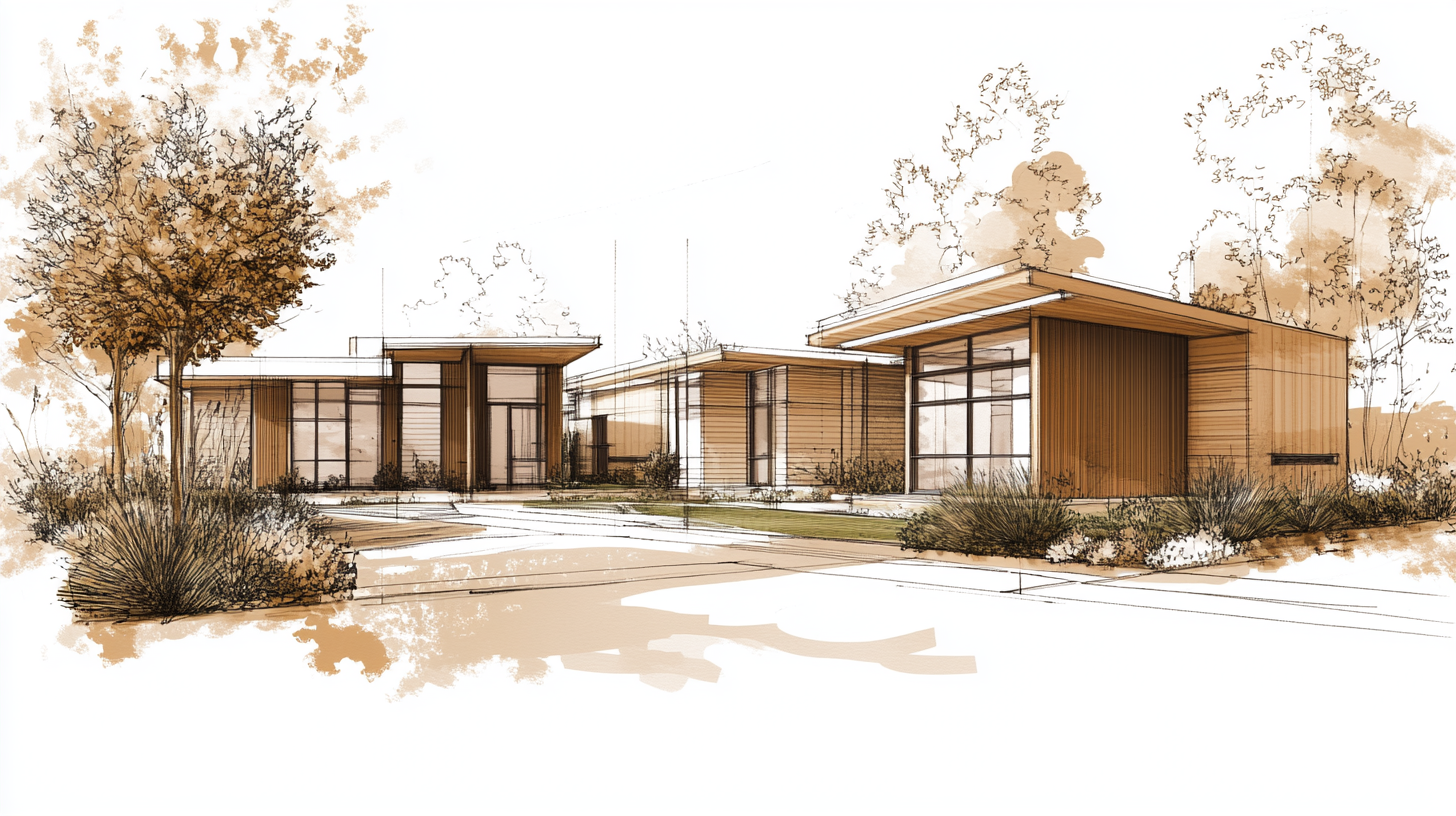
The feasibility study for Built Right is not a consultant report. It is a design competition — open to landscape architects, residential architects, and design firms working with precision-built construction systems. Competing design teams partner with manufacturers of their choice. Submissions are publicly displayed, community-voted, and press-worthy.
This is the move that transforms Built Right from a housing policy initiative into a civic event. The jurisdiction formally asks a question it has likely never formally asked: What does beautiful, affordable, ownership-track housing look like on a small parcel in this community?
The competition generates community ownership of the outcome before a single unit is built. It reframes the political narrative from “workforce housing controversy” to “the community designed something worth looking at.” Native plant palette, bioswale drainage, solar pergola, and edible garden elements are baseline design requirements — not optional. The landscape investment is the primary argument against every neighbor who has ever opposed affordable housing because they feared what it would look like.
How the Competition Works
✦ Open call to landscape & architectural firms
✦ Precision-built or modular construction required
✦ Integrated site + landscape + architecture submissions
✦ Public display of all finalist entries
✦ Community vote alongside a professional jury panel
✦ Winner develops Phase 1 construction documents
✦ Multiple precision-built manufacturers as named partners
✦ Press event and community gathering around public display
For Precision-Built Manufacturers
A pipeline across every California jurisdiction.
Every jurisdiction that adopts Built Right needs precision-built housing partners — for the design competition, for technical specifications, and for supplier relationships across all three program phases. The framework does not specify a single manufacturer. Participating jurisdictions engage a cohort of California-serving precision-built firms, so competing design teams can work with the system best matched to their concept.
Becoming a Built Right manufacturing partner means your product is part of the design competition in every adopting jurisdiction. Architects and designers working on Built Right proposals have direct access to your specifications, pricing, and technical support. You are not pitching one city at a time — you are in the network.
Firms including Dvele, Honomobo, Samara, and Mighty Buildings represent the California-serving category: factory-built homes from compact 640 sq ft two-bedroom units to 1,600 sq ft three-bedroom configurations — architecturally distinctive, seismically resilient, and the opposite of the prefab stigma.
Design Competition Access
Your manufacturing systems are available to competing design teams as named partners. Public display of finalist designs showcases your product in a civic, community-facing context — before a sale, before a contract.
Statewide Pipeline
Each Built Right jurisdiction is a phased buyer across three program cycles, and the model replicates to additional parcels within the same jurisdiction. The CSA network compounds this across every adopting city, county, and agency in California.
Community Credibility
Built Right is a publicly-backed civic program. Manufacturer participation is recognized publicly. Your product becomes part of the story of workforce homeownership done right — in the communities your buyers live in.
The precision-built housing industry has proven what small-scale infill can look like. Built Right creates the civic market for it.
Get Involved
Ready to build something California can be proud of?
An open framework published by the California Stewardship Alliance. Free to adopt. Built to last.