
PILLAR 5
Redirect Capital to Aligned Development
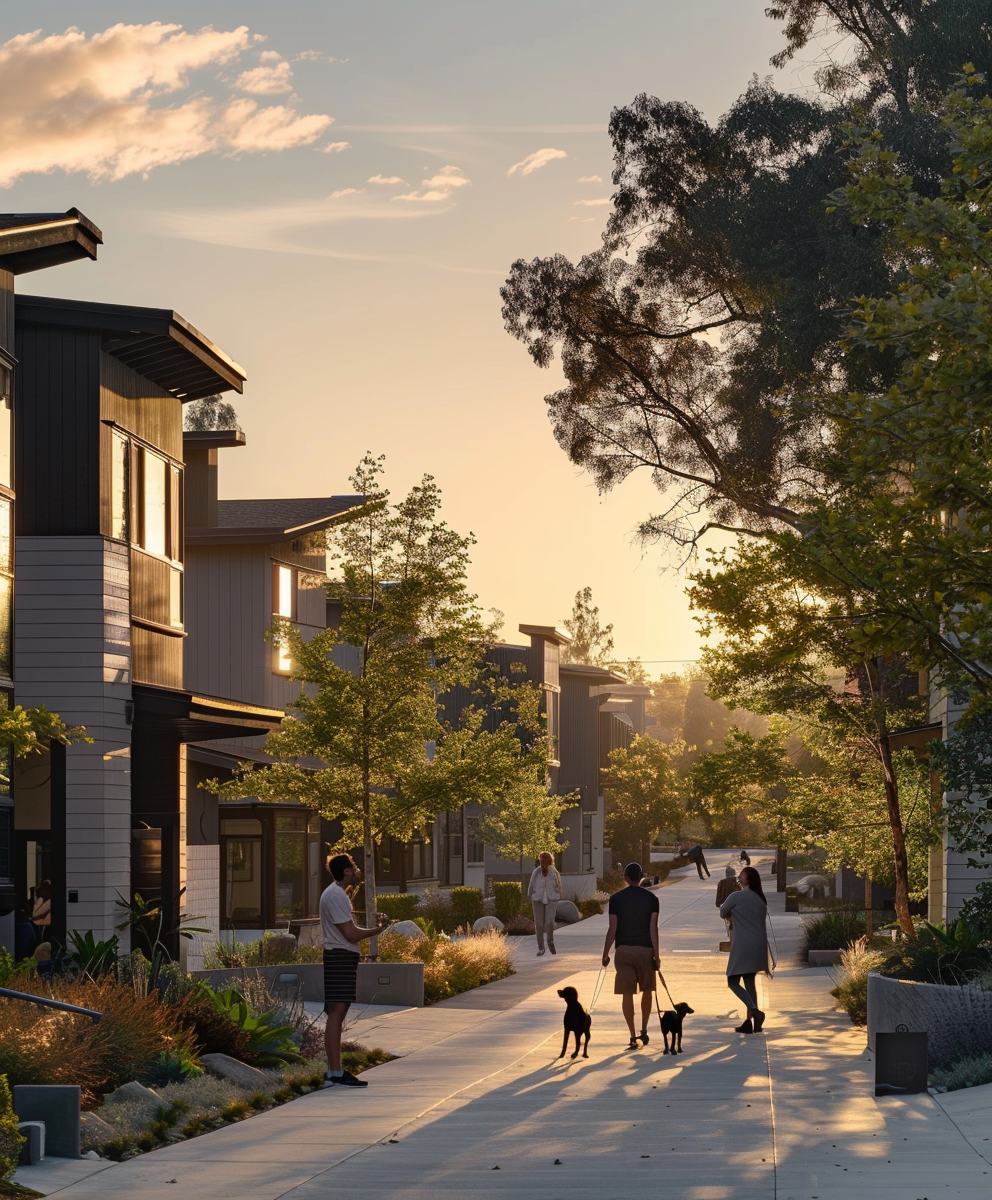
Durable change requires not only better laws and governance, but better destinations for capital already seeking to invest in housing. This pillar looks beyond resistance and reform toward long-term solutions—moving away from a narrow focus on unit counts and density toward models that prioritize quality of life, affordability, sustainability, and community fit.
Beyond "Build, Build, Build"
The Problem
Capital currently flows toward projects optimized for regulatory throughput, not community outcomes. This dynamic reinforces large-scale, investor-driven development regardless of local suitability. Without viable alternatives, policymakers default to density mandates as the only visible solution.
The Opportunity
We can expand the definition of what qualifies as progress in housing. Demonstrating credible, scalable alternatives changes both market behavior and policy assumptions—reducing pressure for blunt, centralized mandates while improving actual affordability and livability.
What "Aligned Development" Means
Innovation in Housing Models
Small and modular home technologies, including cottage-scale and 'mini-home' solutions
Prefabrication and advanced construction methods that lower cost and shorten timelines
Adaptive reuse of underutilized commercial, office, and retail properties
Infill development that respects neighborhood scale and infrastructure capacity
Greenfield development models that integrate infrastructure, services, and affordability from the outset
Mission-Aligned Capital
We're working to attract investors and entrepreneurs focused on outcomes rather than volume—capital aligned with affordability, innovation, and quality of life rather than just regulatory arbitrage.
The Role of Saving California
We don't develop housing ourselves. Instead, we:
Convene conversations between communities, policymakers, and aligned innovators
Surface and share examples of development models that balance affordability with livability
Help articulate demand for housing solutions that serve essential workers and local residents
Encourage capital to engage with cities as partners, not adversaries
Create narrative and policy space for investment that improves lived experience, not just unit counts
Why This Pillar Is Long-Term but Essential
Creating Sustainable Alternatives
Policy reform without market alternatives will be temporary
Capital will continue to seek paths of least resistance unless better options are visible and viable
Aligning capital with stewardship values reduces pressure for centralized mandates
Over time, this transforms the housing conversation from scarcity and quotas to quality and outcomes
This pillar is aspirational but necessary. It represents the positive vision we're building toward—not just what we're defending against.
how this connects
This pillar completes the strategic framework:
Pillar 1 creates the legal environment where innovation can compete with volume-driven development
Pillar 2 enables cities to partner confidently with aligned developers on new models
Pillar 3 helps communities articulate what kinds of development they want, not just what they oppose
Pillar 4 provides resources to convene stakeholders and demonstrate viable alternatives
Without redirected capital, all other efforts remain defensive. With it, we move from resistance to building better futures.
The Outcome We're Working Toward
A broader ecosystem of housing solutions aligned with community values
Reduced tension between housing investment and neighborhood quality of life
Greater affordability achieved through innovation, not overconcentration
A future where housing capital supports communities rather than destabilizing them
This pillar isn't about stopping housing—it's about ensuring housing investment creates the California we want to live in.